
Timeline
Connecting a Complex and Changing World
The Fulbright Program was established in 1946 with an ambitious goal — to increase mutual understanding and support friendly and peaceful relations between the people of the United States and the people of other countries. Browse the historical timeline to learn about some of the significant milestones in the Fulbright Program’s history.

1946
1946
The Fulbright Program Is Established
To promote international goodwill and mutual understanding, President Harry S. Truman signed the Fulbright Act into law on August 1, 1946, launching the framework for the Fulbright Program.
1954
1954
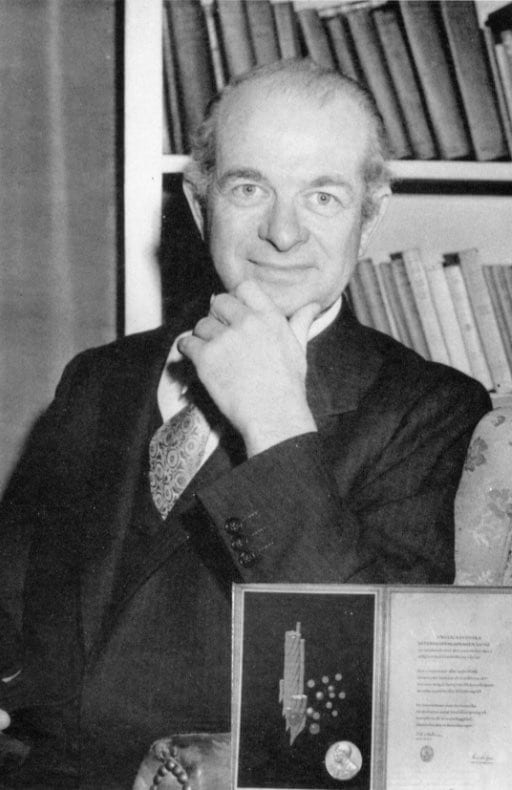
Year of Seven Fulbright Nobel Prize Laureates
Future Fulbrighter Linus Pauling (pictured) won the 1954 Nobel Prize in Chemistry, the same year that six future Nobel Laureates received Fulbright awards: Milton Friedman, Philip Anderson, William Fowler, Niels Jerne, Roy Glauber, and Hannes Alfven.
1954
1954
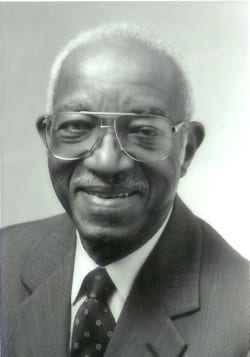
John Hope Franklin Begins Fulbright Journey
Franklin, a Presidential Medal of Freedom winner, author, historian, and Fulbright Foreign Scholarship Board Chair, went on his first Fulbright to the UK in 1954.

1958
1958
First Fulbrighter on Record with a Disability
Jeff Davis Duty, Jr. began his Fulbright in the United Kingdom at the London School of Economics. Later in his legal career, he successfully argued to allow guide dogs in the U.S. Supreme Court.

1961
1961
Passage of Fulbright-Hays Act
President John F. Kennedy signed the Fulbright-Hays Act, re-authorizing the Fulbright Program. The Act also enabled foreign governments to contribute funding to Fulbright programming.

1965
1965
Future Nobel Laureate Starts Fulbright
Muhammad Yunus arrived in the U.S. from Bangladesh to study economics. The professor, social entrepreneur, and founder of Grameen Bank won the Nobel Peace Prize (2006) for microlending to reduce poverty.

1972
1972
Fulbrighter Walks on the Moon
Apollo 17 astronaut and 1958 Fulbrighter to Norway Harrison “Jack” Schmitt is the only scientist and the most recent person still living to have walked on the Moon. He was a NASA administrator, professor, and U.S. Senator (NM).

1978
1978
First Humphrey Fellows
President Jimmy Carter created the Humphrey Fellowship Program, which brings professionals from developing countries to the U.S. for non-degree study, internships, and leadership development.

1986
1986
Fulbright 40th Anniversary
Distinguished Lecturer Grants Program created to celebrate Fulbright’s anniversary. Recipients include luminaries such as poet, memoirist, and civil rights activist Maya Angelou, who traveled on her Fulbright to Liberia in 1986.

1992
1992
Fulbright Expands Following Cold War
Fulbright began in Eastern Europe in the 1940s and operated continuously during and after the Cold War. In 1992, new Fulbright agreements were signed with Bulgaria and Romania and in the 1990s, Fulbright Commissions in nations such as Bulgaria, Czech Republic, Hungary, Poland, and Slovakia commenced or expanded programming significantly.

1993
1993
Rita Dove Named Poet Laureate
Rita Dove, a U.S. Student to Germany in 1974-75, became the youngest and first African American U.S. Poet Laureate in 1993-95. She is also a Pulitzer Prize and National Humanities Medal winner.

1993
1993
Fulbright Association Launches Prize
The Fulbright Association, the U.S. Fulbright alumni group, awarded its first Fulbright Prize for International Understanding to Nelson Mandela for his work fighting apartheid in South Africa.

2007
2007
Fulbright Alumni Serve in Congress
Fulbright alumni have long served in the U.S. Congress. The 110th U.S. Congress convened on January 4, 2007, with four Fulbright alumni serving in the U.S. House of Representatives.

2011
2011
Fulbright-Fogarty Fellowships Established
Many Fulbrighters have engaged in public health projects. With the U.S. National Institutes of Health, Fulbright-Fogarty Fellowships launched to promote clinical research in resource-limited settings.

2014
2014
National Geographic Storytelling Fellowship
Fulbright partners with the National Geographic Society to select and train Fulbrighters to spark broader conversations around globally significant themes.

2017
2017
Classroom Diplomacy
Teacher Exchanges expand program offerings for primary and secondary teachers in the U.S. and 70 countries; nearly 11,000 teacher alumni have brought global perspectives to classrooms around the world.

2019
2019
Fulbright Refreshes Narrative & Brand Identity
The refreshed brand underscores Fulbright is for talented students, scholars, artists, teachers, and professionals who seek to share knowledge and build meaningful and dynamic networks.

2020
2020
Six Fulbright Alumni Lead Their Countries
Colville Norbert Young (Belize), Ashraf Ghani (Afghanistan), Kolinda Grabar-Kitarovic (Croatia), David Granger (Guyana), Alexander de Croo (Belgium), and Francisco Sagasti (Peru) lead their nations.

2021
2021
75th Anniversary of the Fulbright Program
Fulbright marked 75 years with a range of activities celebrating the Program’s broad reach and its positive impact on global and local communities.