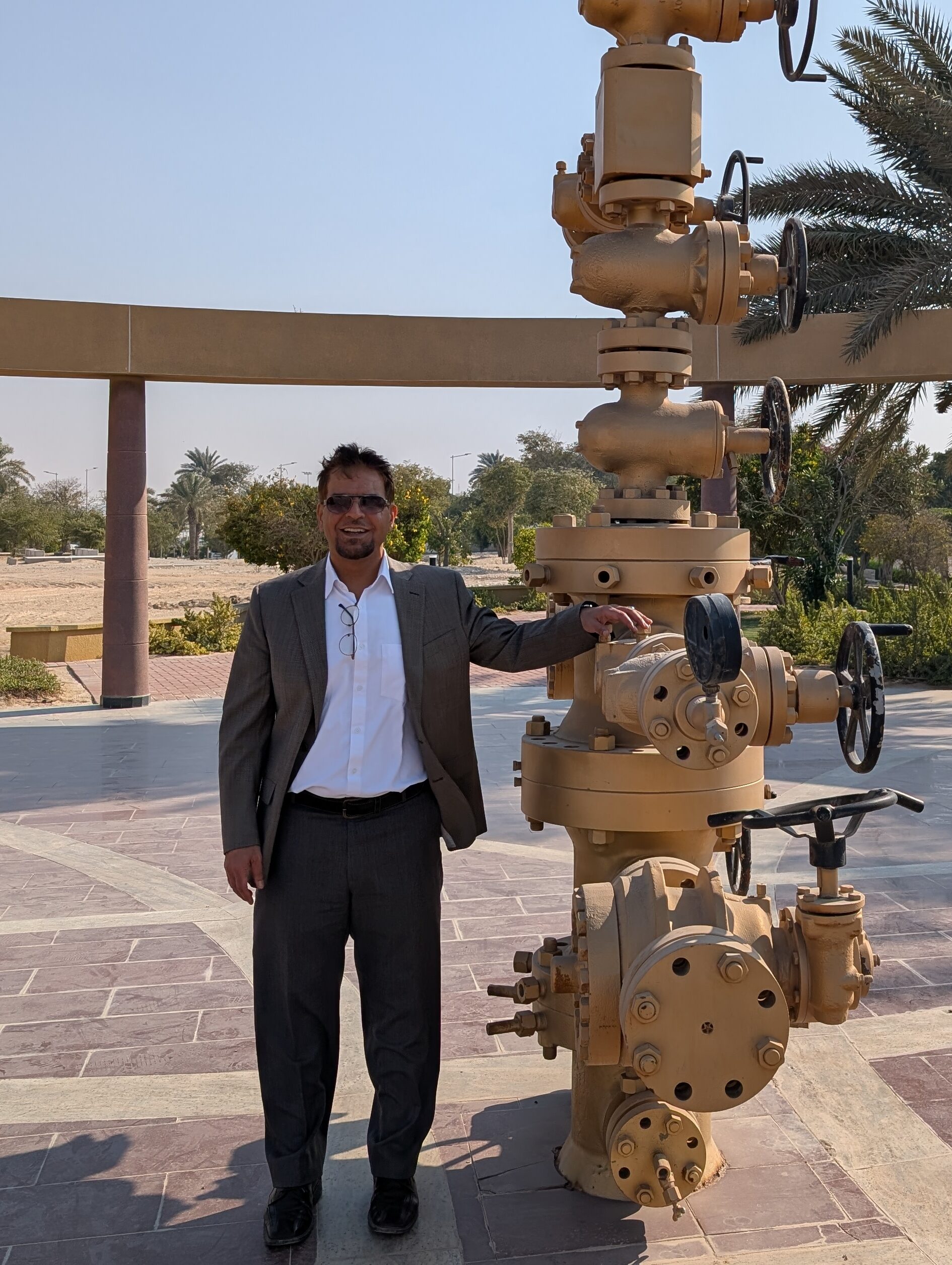
Dr. Ali S. Alshami went to Qatar University as a Fulbright U.S. Scholar with a bold mission: to develop a water purification system that could advance both global water security and energy sector efficiency.
Alshami earned his bachelor’s, master’s, and doctoral degrees in chemical engineering from Washington State University and worked in the American chemical manufacturing and processing industry for a decade before becoming a professor of chemical engineering at the University of North Dakota. There, in addition to teaching, he manages collaborations with scientific institutes, regional and national labs, and industrial partners.
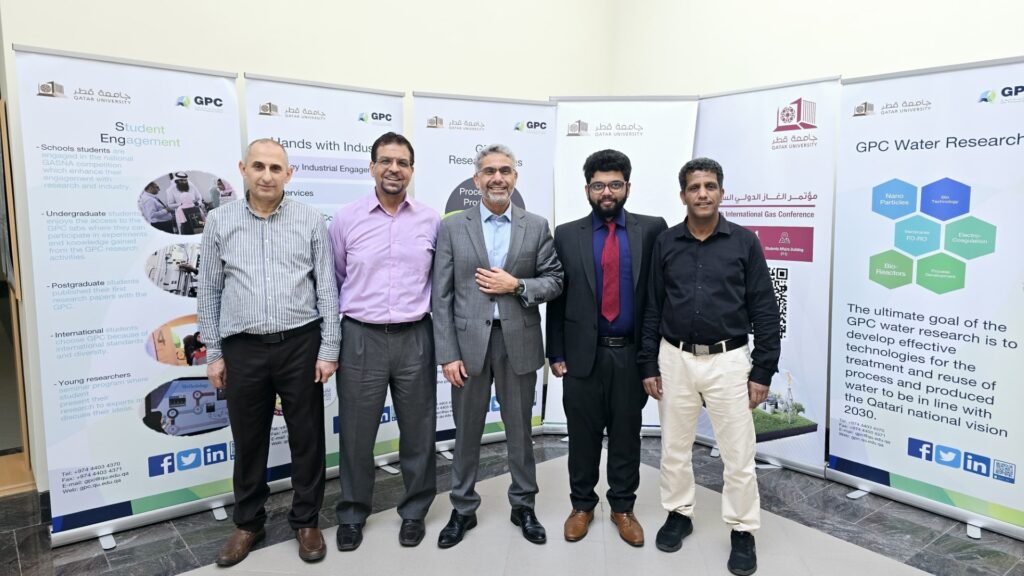
For his Fulbright research project, his goal was to innovate the process of making salt water and brackish water both drinkable and useable. He collaborated with Qatar University’s Center for Advanced Materials (CAM) to develop innovative reverse osmosis (RO) membranes that filter out salt. With the water chemistry of both Qatar and the United States in mind, their goal has been to make potable water using equipment that is durable, efficient, and economically viable in both countries. They engineered membranes that use a unique nanocellulose derived from a natural and sustainable source–date palm leaves. Because these membranes can become less effective over time as calcium scales build up, he also worked with the university’s Gas Processing Center (GPC) to develop specialized chemical additives that, when introduced into water treatment systems, effectively inhibit scale formation and extend the lifespan of the membrane.
Alshami says they are working to enable “sustainable, accessible, and environmentally responsible water desalination… thereby reducing dependence on petroleum-based products and toxic chemicals.” The ultimate goal of his Fulbright research is to contribute to technological advancements within “the broader water-energy nexus,” which he deems “an issue of national security and economic importance.”
Representing American innovation as a Fulbright U.S. Scholar, Alshami was an inspiration for the next generation of scientists and engineers in Qatar. He developed and taught female engineering students a course on engineering fundamentals and ethics, encouraging students to embrace the societal responsibilities of engineers. He also gave public presentations on the Fulbright Program to encourage students at an international school in Dukhan, Qatar to explore graduate opportunities in STEM.
The Fulbright-backed research project fostered joint research opportunities for scientists, engineers, and students in Qatar and the United States. Through workshops, shared lab work, joint thesis supervision, and cross-cultural educational programs the collaboration promoted mutual understanding and advanced scientific innovation.
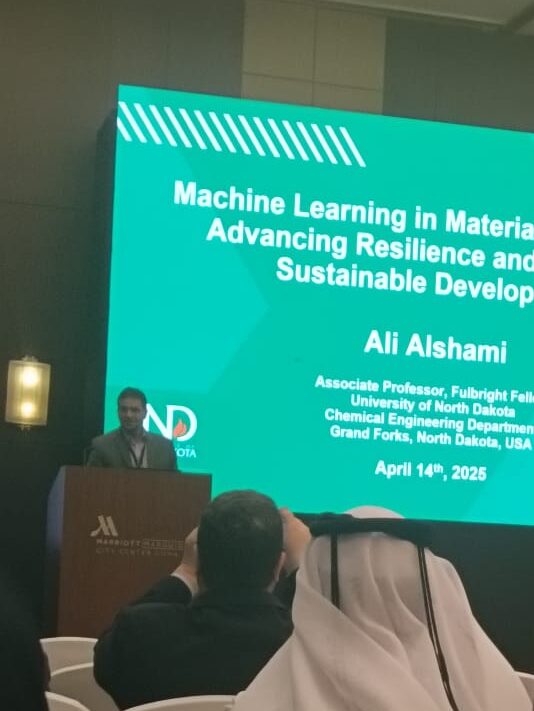
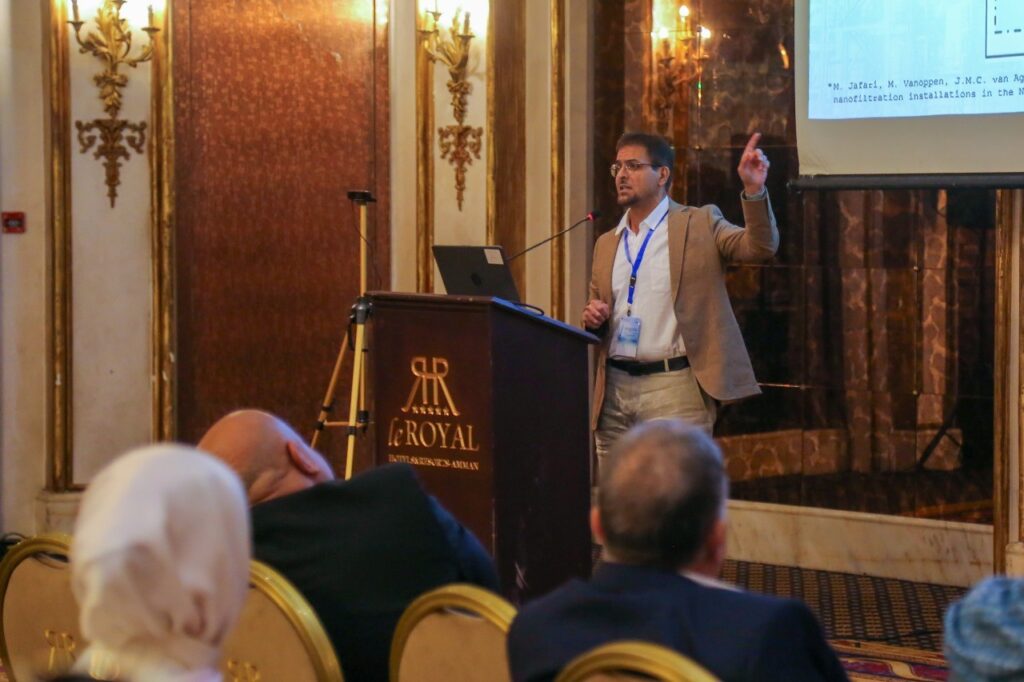
His time at Qatar University led to significant research output. He has developed 16 peer-reviewed research articles, now being published in leading international journals, and delivered 23 research presentations at conferences and symposiums in Jordan, Qatar, and Uzbekistan. Alshami reflects, “the benefits of Fulbright facilitating this high-profile collaboration are shared by my home university, my home state of North Dakota, and America as a whole.”
Alshami says this opportunity has elevated UND’s “institutional reputation through Fulbright-backed research.” He has been able to help both his own research, and his university’s research, in critical areas such as natural resource management, energy production, and sustainability. Alshami is proud to advance North Dakota’s knowledge-based economic goals to foster innovation, training future engineers and scientists, and cultivating global partnerships. He says that “Fulbright positions American universities at the forefront of sustainable water technology, an area vital to tackling global challenges in water scarcity and rising energy demand.”
UND Provost Eric Link congratulated Alshami and noted that having faculty from the University of North Dakota participate in Fulbright enables UND to have an impact “way beyond the borders of Grand Forks.”
His research is even having an impact on aerospace, including NASA’s Artemis missions to establish a human presence on the moon. Since his Fulbright, he has received a grant from NASA to work on a project entitled “Infusing Artemis Missions with Bioregenerative Life Support System (BLiSS).” Similar to his Fulbright research, BLiSS also relies on highly-engineered membranes in order to recycle resources and grow safe, edible food. Alshami will test BLiSS at UND’s Inflatable Lunar/Martian Analog Habitat. His work will support the long-term strategic goals of NASA to maintain the role of the United States as the world leader in space exploration.
In addition to water treatment facilities in the United States, Qatar, and even outer space, Alshami posits that his research findings have potential applications “for the oil and gas and energy industries, the food and beverage industry, and for private investment and venture-backed startups.”